


How to Clean Felted Wool Flowers at Home, Step by Step
Last Updated: November 1, 2026
Quick Summary
To clean felted wool flowers, start by brushing off dust with a soft dry brush, then wash only if needed in cool water with a drop of mild soap. Rinse, blot gently without wringing, and dry on a shaped surface so the petals keep their form.
- Brush the flower dry first, using light strokes from the centre of each petal outward.
- Test for colour bleeding by dabbing a damp white cloth on an inconspicuous spot before washing.
- Use cool water and a few drops of mild soap, never hot water, bleach or harsh detergents.
- Never twist or wring the flower, because that friction causes felting and permanent distortion.
- Reshape the petals while still damp, then dry on a mesh rack or towel mound rather than flat.
Table of Contents
- Why Felted Wool Flowers Need Different Care Than Real Blooms
- Gather the Right Supplies Before You Start
- How to Remove Dust from Felt Flowers with a Soft Brush
- How to Wash Felted Wool Flowers in Cool Water
- How to Spot-Clean Wool Felt Without Soaking the Whole Flower
- How to Remove Stains from Felt Flowers
- How to Dry and Reshape Felted Flowers So Petals Keep Their Form
- How to Store Wool Felt Flowers and Book Your Next Care Step
- Frequently Asked Questions
Why Felted Wool Flowers Need Different Care Than Real Blooms
Clean felted wool flowers are made from fibres that have been matted together, so they do not behave like cut stems.
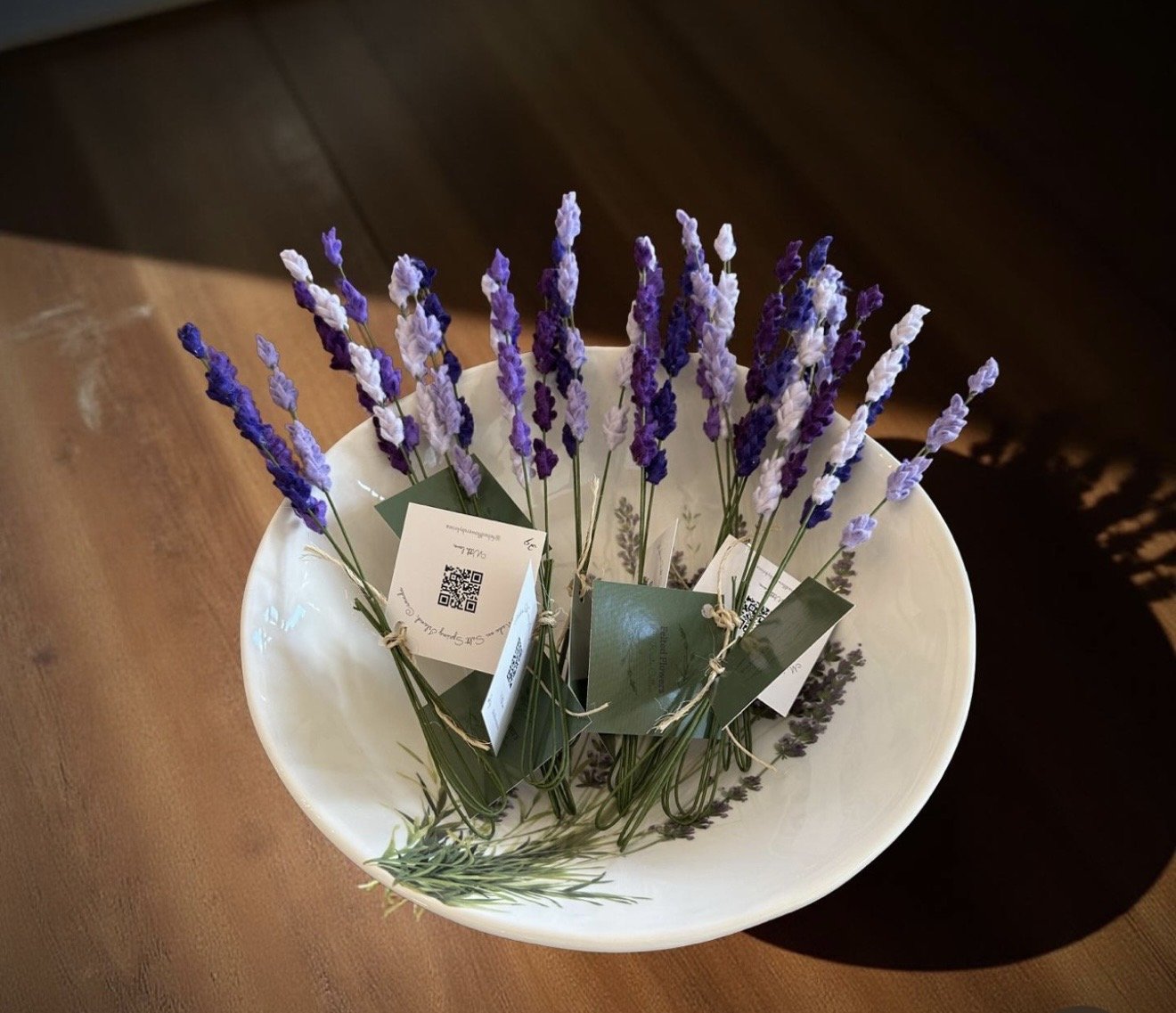
The main difference is that felt holds dirt in its fibres. Dust settles into the loose surface, and a careless wash can shift the petals out of shape. Treat your flower like a soft textile, not a plant.
- Felt traps dust, so surface cleaning matters more than you might expect
- Wet felt can shrink or lose its shape if it gets rough handling
- Heat and harsh soap can change the colour and texture
Gather the Right Supplies Before You Start
Having the right tools on hand makes the job quicker and safer. You do not need anything expensive. Most of what you need is probably already in your home.
- A soft, dry paintbrush or a clean makeup brush
- A small basin of cool, room-temperature water
- A mild, unscented liquid soap or wool-safe detergent
- A clean white towel for blotting
- A flat surface lined with a second towel for drying
Keep the soap mild. Harsh detergents can strip colour and make the fibres stiff. A few drops of soap is plenty.
How to Remove Dust from Felt Flowers with a Soft Brush
Start with the dry step.
Hold the flower gently by its base or stem. Brush the petals in one direction, from the centre outward, using light strokes. Work slowly so you do not pull fibres loose.
Watch out: brushing against the grain of the petals can lift small fibres and leave the surface fuzzy. Always brush in the same direction the petals naturally lie.
How to Wash Felted Wool Flowers in Cool Water
Washing is only needed when the flower has real grime, such as food residue, oil from hands or a build-up of dirt in the centre.
Fill a basin with cool, room-temperature water. Add a few drops of mild soap and swish until you see light bubbles.
Rinse with clean cool water until no soap remains. Then press the flower gently between two towels to remove excess water.
Test for Colour Bleeding Before Washing
Some dyed wool releases colour when it gets wet, and that can stain your towels or nearby petals. Before you wash the whole flower, dab a damp white cloth onto an inconspicuous spot, such as the underside of a leaf or the base. If colour transfers to the cloth, skip the full wash and spot-clean instead.
How to Spot-Clean Wool Felt Without Soaking the Whole Flower
Spot-cleaning is the safer choice for delicate pieces, heavily dyed flowers or flowers with embellishments that could be damaged by water. It also works well when only one petal has a mark.
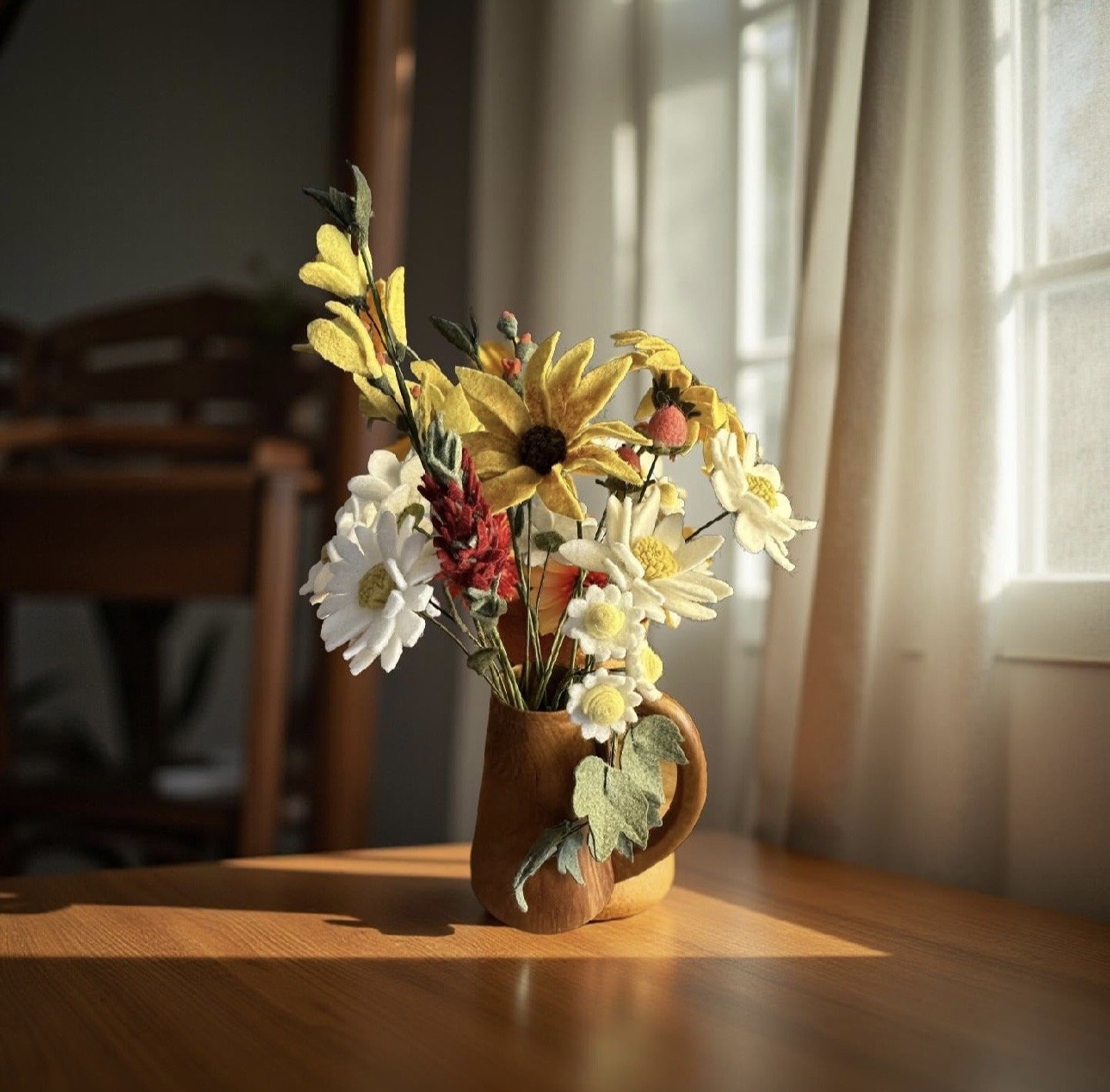
Dip a clean cotton swab in cool water with a drop of mild soap. Dab the stained area lightly. Then blot with a dry cloth. Work from the outside of the stain inward so the mark does not spread.
How to Remove Stains from Felt Flowers
Stains behave differently on felted wool than on flat fabric. The matted fibres pull liquid inward, so a mark can spread sideways through the petals before it dries. The goal is to lift the stain out of the surface without pushing it deeper or creating a water ring around the edge. Identify the stain first, then use the matching method below.
Oil and grease
Oil darkens wool fibres and attracts dust, so treat it before it sets. Sprinkle a small amount of cornstarch or baby powder over the spot and press it lightly with your fingertip. Leave it for 15 to 20 minutes so the powder can draw oil out of the fibres, then brush it away with a soft dry brush.
Food and drink
Blot immediately with a clean white cloth to lift as much liquid as possible. Do not press hard, because pressure pushes the stain through the layers of the flower. Mix one drop of mild, unscented soap in a cup of cool water. Dab the stain with a cotton swab, then blot with a dry cloth. Repeat with clean water to rinse the soap residue, and blot again.
Poppies with bud in a White Vase →
Dust and grime build-up
Dust that has settled deep into the fibres can look like a stain. Brush the flower dry first, using light strokes from the centre of each petal outward. If the grime is greasy, the cornstarch step above will help before any water touches the piece. Water alone can set dusty grime into the fibres, so always start dry.
Ink and dye marks
These are the hardest marks to remove from felted wool, and aggressive rubbing will spread them. Dab gently with a cotton swab and cool water only, blotting between passes. If the mark does not lift after two or three light passes, stop. Further rubbing can felt the surface and leave a permanent fuzzy patch. In that case, a small decorative patch or a repositioned petal may be the better fix.
Preventing rings and spread
Work from the outside of the stain toward the centre so the mark does not grow. Use a clean section of cloth for each blot. Keep the damp area as small as possible, and dry the spot immediately with a dry cloth or a cool hairdryer on the lowest setting held at least 12 inches away. A common pattern is for a stain to look gone while the piece is wet and reappear as a faint ring once it dries, so check the spot again after it is fully dry.
How to Dry and Reshape Felted Flowers So Petals Keep Their Form
Drying is where most felted flowers lose their shape. Wet wool fibres are pliable, and if the piece dries flat or under weight, the petals set in the wrong position. The method below helps the flower dry while holding each petal in its natural curve.
Remove excess water without wringing
After rinsing, lay the flower on a clean white towel and fold the towel over it. Press down gently with the flat of your hand, then lift the towel and reposition the flower on a dry section. Repeat once or twice until the towel stops absorbing water. Never twist or wring the flower, because that friction is what causes felting and permanent distortion.
Set the shape before drying
While the flower is still damp, reshape it. Cup each petal between your thumb and forefinger and gently curve it back into its original line. For layered flowers, work from the outer petals inward so the inner layers are not crushed. If the flower has a stem or wire, straighten it now, because it will be harder to adjust once dry.
Dry on a shaped surface, not flat
A flat surface is the main cause of flattened flowers. Instead, rest the flower on a clean mesh rack, a folded towel shaped into a gentle mound, or a small bowl lined with tissue so the petals can hang in their natural curve without resting on a hard surface. Keep the piece in a room with good airflow, away from direct sunlight and heat sources.
Check and adjust during drying
Drying time depends on the size and density of the flower. Check the piece every couple of hours. If a petal has drooped or folded, reshape it gently with clean, dry fingers. This is the advantage of air-drying: you can correct the shape while the fibres are still slightly damp. Once the flower is fully dry, the shape is set and further adjustment risks stretching the fibres.
Finish and hold the shape
When the flower is dry to the touch, gently fluff the petals with your fingertips. If a petal has dried with a crease, a light steam from a kettle held at least 12 inches away for a second or two can relax the fibre, but keep the flower moving so no single spot gets too much moisture. Let it air-dry again before displaying or storing it.
The drying stage is where felted flowers most often lose their shape, so these are the main steps to follow.
| Step | What to do | Note |
|---|---|---|
| Remove excess water | Press gently in a folded white towel | Never twist or wring |
| Set the shape | Curve each petal back while damp | Work outer petals first |
| Dry on a shaped surface | Rest on mesh rack or towel mound | Avoid flat drying |
| Check during drying | Look every couple of hours | Reshape while slightly damp |
| Finish | Fluff petals once dry | Air-dry again after steaming |
How to Store Wool Felt Flowers and Book Your Next Care Step
Store clean, fully dry flowers in a cool, dry place away from direct light. A breathable cotton bag or a box lined with tissue works well. Avoid sealed plastic bags, which can trap moisture and encourage odour.
Once your flowers are clean and stored, you may want to think about how to show them off. Our guide on display felt flowers covers styling methods that suit different rooms. If you are wondering how long your pieces should last, this guide on felt flower care and storage goes deeper. And if you keep pets, our notes on cat safe indoor flower arrangements explain which setups work best around curious paws.
If a flower needs a fresh start, a new piece can be a good option. Our Vintage Inspired Merino Wool Christmas Brooch in Ivory is made from Merino wool, so it can be a clean, decorative alternative to a damaged piece.
Frequently Asked Questions
Can you wash felted wool flowers in water?
Yes, but only with cool or room-temperature water and a mild detergent. Hot water and agitation can cause felt to shrink, distort, or lose its shape. Submerge the flower gently, swish it softly, and rinse with clean cool water until no soap remains. Avoid wringing. Press out excess water with a clean towel instead, then air dry flat on a towel away from direct heat. Test a hidden area first if the dyes are dark or the piece is a bright colour, since some wool dyes can bleed.
How often should you clean felted wool flowers?
Most felted flowers only need dusting every few weeks, depending on how much they sit in a dusty room or in direct light. Wash them only when they look dirty, stained or limp, because repeated wetting can gradually weaken the felt. A soft brush or a gentle blast of air is enough for routine maintenance, and a full cool-water wash is best kept for occasional refreshing.
Can wool felt flowers be cleaned with soap?
A small amount of mild, pH-neutral soap or wool-safe detergent works well. Harsh household cleaners, bleach, and scented products can damage fibres or change colour. Dissolve a few drops in cool water, let it form soap bubbles, and dip the flower lightly rather than scrubbing. Rinse thoroughly, because leftover soap residue can make the felt feel stiff once dry.
How should felted wool flowers dry after cleaning?
Lay the flower flat on a dry towel and press gently to absorb moisture. Then reshape the petals by hand while they are still slightly damp, and let them air dry away from heat, sunlight and radiators. Drying can take a day or more. Avoid hair dryers and dryers, since heat can distort the felt and make petals curl unevenly.

Leave a comment