


How Long Do Felt Flowers Last? Care and Storage Tips
Table of Contents
- How Long Do Felt Flowers Last? The Short Answer
- What Determines How Long Felt Flowers Last
- How to Care for Felt Flowers Day to Day
- How to Clean Felt Flowers Without Damaging Them
- How to Display Felt Flowers for Maximum Longevity
- How to Store Felt Flowers When Not on Display
- Conclusion: Getting the Most Years From Your Felt Flowers
- Frequently Asked Questions
Last Updated: October 13, 2026
How Long Do Felt Flowers Last? The Short Answer
A well-made felt flower arrangement lasts for many years, often decades, with basic care. Wool felt holds its shape and color far longer than fresh blooms, which fade within a week.
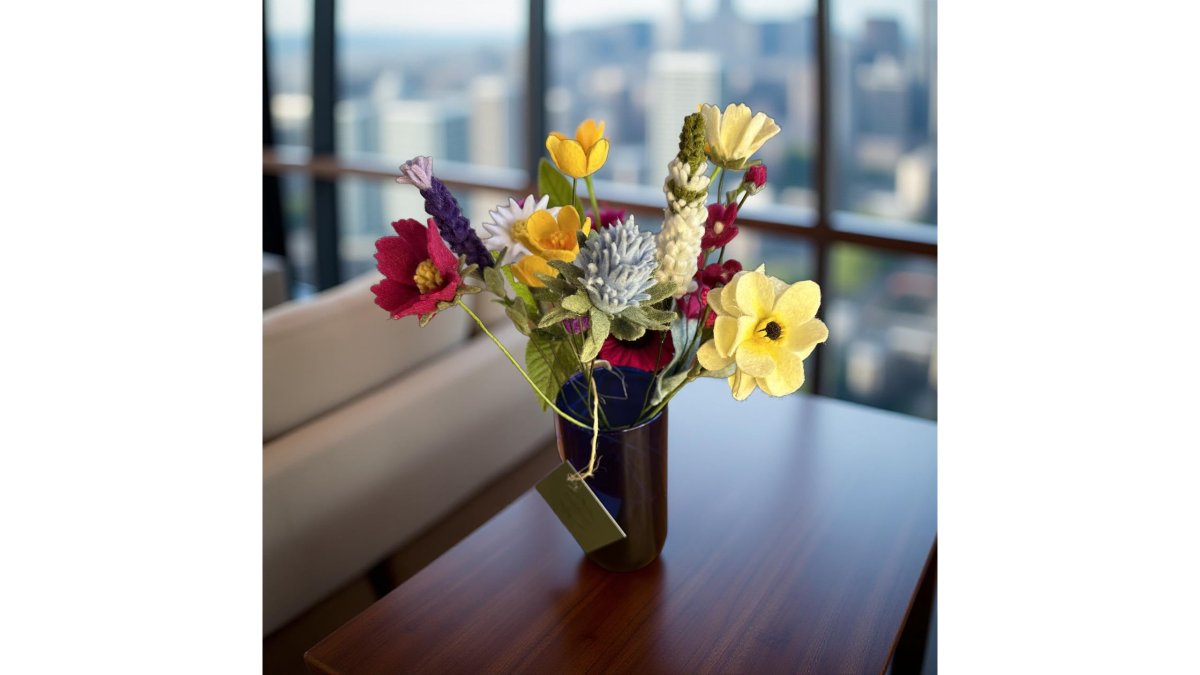
The longer answer depends on what your flowers are made of and how they were built.

What Determines How Long Felt Flowers Last
Two things decide how well felt flowers age: the material and how carefully they're assembled. Get both right and your arrangement stays vibrant for a generation; get either wrong and you'll see fading, pilling, or drooping petals within a year or two.
Material matters: wool, synthetic, and blends
Wool felt is the gold standard.
Synthetic felt, usually polyester or acrylic, is needle-punched staple fiber.
Blends sit in the middle and are the most common commercial option, combining wool's shape memory and dye retention with polyester's lower cost and mold resistance.
Here's a practical lifespan estimate by material, assuming normal indoor display and basic care:
| Felt Material | Typical Display Lifespan | Fade Resistance | Pilling Risk | Notes |
|---|---|---|---|---|
| 100% wool (e.g., Merino) | 15-30+ years | High | Low | Best shape memory; keep dry and moth-free |
| Wool-polyester blend | 10-20 years | Medium-high | Low-medium | Balanced cost and durability |
| 100% synthetic (polyester/acrylic) | 3-8 years | Low-medium | Medium-high | Fades and fuzzes faster in sun |
| Craft-store acrylic | 2-5 years | Low | High | Fine for seasonal decor, not heirlooms |
These are ranges, not guarantees: a wool bloom in a dark hallway outlasts an identical one on a sunny windowsill by years.
At Felted Flowers, our arrangements use Merino wool and recycled polyester felt blends, the softness of wool with added durability.
Construction quality and assembly
How a flower is built matters as much as what it's built from. Hand-cut petals with reinforced stitching hold their shape; glued-only petals lift over time, especially in warm rooms where adhesive softens and re-hardens.
The construction details that predict longevity:
- Petal attachment: Stitched or needle-felted petals into the center survive handling and packing far better than spot-glued petals, which can pop off when the flower is squeezed or stored.
- Edge finishing: Blanket-stitched or felted edges resist fraying. Raw cut edges on loosely felted synthetic sheets fray within months of handling.
- Stem construction: Wire-wrapped stems bend and re-bend without breaking; glued floral-tape stems crack and shed over time.
- Backing and reinforcement: A felt or interfacing backing behind larger petals prevents drooping, especially on heavy blooms like peonies or sunflowers.
- Dye method: Piece-dyed felt (color throughout) hides wear better than surface-painted or printed felt, where scratches reveal the base color.
A common mistake is judging felt flowers by looks alone. Flip one over. Check the backing and the stem wrap. That's where quality shows.
The factors that quietly shorten lifespan
Material and construction set the baseline, but five everyday factors decide whether you get the low or high end of the range:
- Sunlight (UV): The single biggest cause of fading. UV breaks down dye molecules in any textile. Direct sun for a few hours a day can visibly fade synthetic felt within a year.
- Humidity and moisture: Wool absorbs moisture, which can lead to matting, mildew, and a musty smell. Damp basements are the worst storage choice.
- Dust and handling: Dust settles into fibers and, if rubbed rather than lifted, works grit into the surface. Frequent squeezing and rearranging loosens glued joints.
- Heat: Radiators, vents, and sunny sills dry out and stiffen wool over time, and soften adhesives.
- Pests: Clothes moths and carpet beetles eat wool. A single season in an unprotected closet can leave holes.
Control those five and you push your flowers toward the top of their material's range; ignore them and even good wool felt looks tired within a few years.
How to Care for Felt Flowers Day to Day
Daily care takes almost no effort: keep felt flowers out of harsh direct sun and damp areas, and dust them lightly now and then.
A few habits protect your arrangement:
- Keep them off windowsills that get hours of strong sun
- Avoid placing them near radiators or heating vents
- Rotate the arrangement every few months so one side doesn't fade
- Keep them away from curious pets that might chew the petals
Felt is naturally low-maintenance, no watering, feeding, or trimming.
How to Clean Felt Flowers Without Damaging Them
Cleaning felt flowers is simple if you're gentle: a soft brush or low-suction vacuum for dust, a barely damp cloth for marks. Never soak felt in water.
Removing dust and light marks
Start with the softest method: a dry makeup brush or clean paintbrush reaches between petals.
For light marks, dab, don't rub. Rubbing pushes dirt deeper into the fibers.
- Dust: soft brush or vacuum with a brush attachment on low
- Light marks: barely damp white cloth, dab gently
- Stubborn spots: test a tiny hidden area first
- Never: machine wash, soak, or wring felt flowers
Let any damp area air-dry fully before returning the flowers to display, or you'll get water rings.
How to Display Felt Flowers for Maximum Longevity
Where you display felt flowers decides how long their color lasts.
Sunlight is the biggest threat. UV rays fade dye over time, even on wool.
Display ideas that protect your flowers:
- A ceramic pitcher on a hallway table, away from direct sun
- A wall-mounted wreath in a shaded entryway
- A centerpiece on a dining table, moved before heavy cooking steam
- A garland along a mantel, kept clear of heat sources
Our Canadian Conservation Institute guidance on caring for textiles recommends limiting light exposure and keeping textiles in stable humidity.
For a statement piece, The Eternal Bloom stands approximately 53 cm high and holds over 25 hand-sculpted flowers. It's built to be seen, not tucked away.
How to Store Felt Flowers When Not on Display
Storing felt flowers correctly protects them between seasons: a breathable box, acid-free tissue, and a cool, dry spot. Skip plastic bins, which trap moisture. Storage is also a seasonal routine that includes a wear check and simple repairs before the flowers go away.
The storage environment
Aim for a cool, dark, dry space with stable conditions: below about 21°C (70°F) and under roughly 50% relative humidity, the same conditions museums use for textiles.
Light matters even in storage: UV fades dye whether flowers are on a shelf or in a box, so use an opaque or dark container, or store the box inside a closed closet.
Step-by-step packing
- Clean and fully dry the flowers first. Any dust or dampness packed away becomes a problem later.
- Do a wear check. Look for fading, fraying edges, loose petals, bent wires, and any pest damage. Note what needs repair before storage.
- Make simple repairs now. Re-stitch loose petals, trim frayed edges with sharp scissors, and gently reshape bent wire stems. Repairs are easier before the flower is wrapped.
- Wrap each bloom loosely in acid-free tissue paper. Loose wrapping lets the felt breathe; tight wrapping crushes petals and leaves creases.
- Support the shape. For large or structured blooms, place a small crumpled tissue ball inside the petal cup to hold the form, and lay flat or stand upright, never stack.
- Place them in a sturdy cardboard or fabric box. Cardboard and fabric breathe; sealed plastic traps moisture and can cause mold and musty odors.
- Add pest protection for wool. Cedar blocks or sachets of dried lavender or cedar shavings deter clothes moths. Avoid mothballs, which leave a lingering chemical odor in wool.
- Label the box with contents and date so you can rotate arrangements and spot anything that's been stored too long.
- Store in a cool, dry closet, not a basement or attic.
For smaller arrangements like our Saltspring Island Signature Flower Arrangement, a single box holds everything safely.
Seasonal rotation and re-display
If you swap arrangements with the seasons, treat each swap as a maintenance moment:
- Before packing away: clean, check for wear, repair, and dry fully.
- Before re-displaying: unpack in a dry room, let the flowers sit at room temperature for a few hours to relax any storage creases, then gently reshape petals by hand.
- Rotate display positions each season so no single arrangement sits in the same light for years on end.
- Re-check for pests when unpacking wool pieces, especially if they were stored near other natural-fiber textiles.
Signs of wear and when to repair vs. replace
Not every flaw means the end of a flower's life. Most are fixable:
| Sign of Wear | Likely Cause | Fix |
|---|---|---|
| Faded color | UV exposure | Rotate away from sun; severe fading is permanent |
| Frayed petal edges | Handling, low-quality felt | Trim with sharp scissors; stitch if structural |
| Loose or detached petal | Glue failure or broken stitch | Re-stitch or re-felt into the center |
| Pilling or fuzz | Synthetic fiber wear | Trim pills with small scissors; do not shave |
| Musty smell | Stored damp | Air out in a dry, shaded room; do not wash |
| Holes | Clothes moths or beetles | Patch with matching felt; treat storage area |
| Bent stem | Handling or packing | Gently reshape wire; replace if cracked |
Replace a flower only when the felt itself has broken down, thinned, torn beyond patching, or faded through the fiber. Surface issues are almost always repairable, which is part of why felt flowers outlast other artificial blooms.
Conclusion: Getting the Most Years From Your Felt Flowers
The real challenge with felt flowers isn't making them last. It's remembering they don't need the fuss fresh blooms do. A little shade, a light dusting, and smart storage are all it takes to enjoy them for years.
That's where Felted Flowers comes in. Every arrangement is handcrafted flower by flower from Merino wool and recycled polyester felt blends.
Get started with Felted Flowers and bring lasting floral decor into your home.
Frequently Asked Questions
How long do felt flowers last?
With proper care, felt flowers can last for many years. The exact lifespan depends on the felt type, construction quality, and how you store and display them. Wool felt is more durable than synthetic felt, and handcrafted arrangements like those from Felted Flowers are built to hold their shape and color for many years.
How do you clean felt flowers without damaging them?
Use a soft brush or a vacuum on the lowest setting with a brush attachment to remove dust. For deeper cleaning, gently wipe with a barely damp cloth, then let them air dry away from direct heat. Avoid soaking felt flowers or using harsh chemicals, which can break down the fibers and cause colors to bleed.
Can felt flowers get wet?
Felt flowers can handle a light mist or brief exposure to humidity, but they should not get soaked. Water can cause wool fibers to mat and synthetic felt to lose its shape. If they do get wet, blot gently with a dry cloth and let them air dry away from direct sunlight or heat sources.
Does sunlight damage felt flowers?
Yes, prolonged direct sunlight fades felt over time. UV rays break down dyes and weaken fibers, especially in synthetic felt. Display your felt flowers in a spot with indirect light, or rotate them away from windows every few months to keep colors vibrant for longer.
Leave a comment