


Best Hypoallergenic Floral Decor Ideas for Your Home
Table of Contents
- Why Hypoallergenic Floral Decor Belongs in Every Room
- Quick Comparison: Allergy-Friendly Floral Decor Options
- Low-Pollen Flowers for Home Arrangements That Actually Work
- Felt Flower Display Ideas for Allergy-Friendly Floral Decor
- How to Clean Felt Flowers and Keep Them Looking New
- Non-Floral and Faux Alternatives for Allergy-Friendly Floral Decor
- Cost, Longevity, and Care: Fresh vs. Felt Floral Decor
- Conclusion: Choosing the Right Hypoallergenic Floral Decor
- Frequently Asked Questions
Last Updated: October 15, 2026
Why Hypoallergenic Floral Decor Belongs in Every Room
Hypoallergenic floral decor is any arrangement or botanical accent chosen to minimize allergic reactions, whether by using low-pollen or pollen-free materials or by replacing fresh blooms with crafted alternatives.
Most guides hand you a list of "safe" flowers and stop there. But pollen is only one of three ways flowers cause misery, and misdiagnosing your trigger means even a pollen-free bouquet can leave you congested.
The three culprits are pollen, fragrance, and contact sensitivity. Each demands a different solution.
Pollen Allergy vs. Fragrance Sensitivity vs. Contact Reaction
Pollen allergy is an immune response to airborne pollen grains, causing sneezing, itchy eyes, and congestion. It's triggered by flowers with loose, powdery pollen designed to travel on the wind, like daisies, chrysanthemums, and baby's breath.

Fragrance sensitivity is a reaction to volatile scent compounds, not pollen. Headaches, nausea, and irritated airways are the usual signs.
Contact sensitivity shows up as skin irritation after touching a plant, usually from the sap or oils in certain stems.
Many customers blame pollen when fragrance is the real problem. If symptoms appear within minutes of entering a room and fade when you leave, suspect scent; if they build gradually with itchy eyes, suspect pollen.
Quick Comparison: Allergy-Friendly Floral Decor Options
The table below compares the main categories of allergy-friendly floral decor on allergy risk, upfront cost, and lifespan.
| Option | Allergy Risk | Upfront Cost (CAD) | Lifespan | Care Needed |
|---|---|---|---|---|
| Low-pollen fresh flowers | Low to moderate | $25-$80 per bouquet | 5-10 days | Water, trimming, daily |
| Potted low-pollen plants | Low | $15-$45 | Months to years | Watering, light, repotting |
| Dried florals | Low | $20-$60 | 6-12 months | Dusting, gentle handling |
| Faux botanicals | Very low | $15-$70 | 1-3 years | Dusting |
| Handcrafted felt flowers | Very low | $18-$99 | Years | Occasional dusting |
Prices reflect typical Canadian retail ranges. Handcrafted felt costs more upfront but spreads that cost across years rather than days.
Low-Pollen Flowers for Home Arrangements That Actually Work
The best low-pollen flowers for home arrangements are roses, tulips, orchids, hydrangeas, carnations, and camellias. These plants produce heavy, sticky pollen that stays put instead of drifting into the air, but how you handle, place, and maintain the arrangement matters just as much.
"Low-pollen" is not the same as "pollen-free." Even a rose has pollen; its grains are simply too heavy to become airborne in any real quantity. A flower can also be low-pollen but high-scent, a separate problem for anyone with fragrance sensitivity.
Roses, Tulips, Orchids, and Hydrangeas
Roses top most lists: their pollen is heavy and waxy, and modern hybrids often produce very little. Tulips behave similarly, with pollen that stays inside the cup of the bloom.
Hydrangeas earn their place through petal volume rather than pollen biology: their showy blooms are mostly sterile, so the pollen-producing parts are minimal, ideal for a large arrangement that fills a table without filling the air.
Handling and Placement: The Step Most Guides Skip
How you handle fresh flowers matters as much as which ones you buy. Cut stems at an angle, strip leaves below the waterline, and change the water every two days. Stagnant water breeds mold, and mold spores trigger the same symptoms as pollen, sometimes worse.
Placement is the other lever. Keep arrangements out of bedrooms if you are pollen-sensitive, and position blooms away from air vents and fans, which lift settled pollen and circulate it. A dining table or entryway console is usually safer than a nightstand.
Cleaning and Maintenance
Wipe leaves with a damp cloth weekly to remove settled pollen and dust before it becomes airborne, and remove any bloom that starts dropping pollen or petals. Wash your hands after handling stems, since contact sensitivity can show up as skin irritation from sap or oils.
Flowers to Avoid if You Have Allergies
Skip these if pollen is your trigger:
- Daisies and gerbera daisies, loose, airborne pollen
- Chrysanthemums, among the worst offenders for fall allergies
- Baby's breath, deceptively irritating despite its delicate look
Lilies hit twice: heavy scent for the fragrance-sensitive and visible pollen for everyone else.
Pet and Child Safety
Low-pollen does not mean pet-safe. Several popular blooms, including lilies, tulips, and hydrangeas, can be toxic to cats, dogs, or both if chewed or ingested, and lilies are a serious risk to cats. Keep fresh arrangements on high surfaces and check any plant against a reputable pet-toxicity reference. Felt and faux alternatives sidestep this concern entirely.
Felt Flower Display Ideas for Allergy-Friendly Floral Decor
Handcrafted felt flowers solve the allergy problem completely: no pollen, no fragrance, no sap, and they never wilt, so the arrangement you style once stays exactly that way.
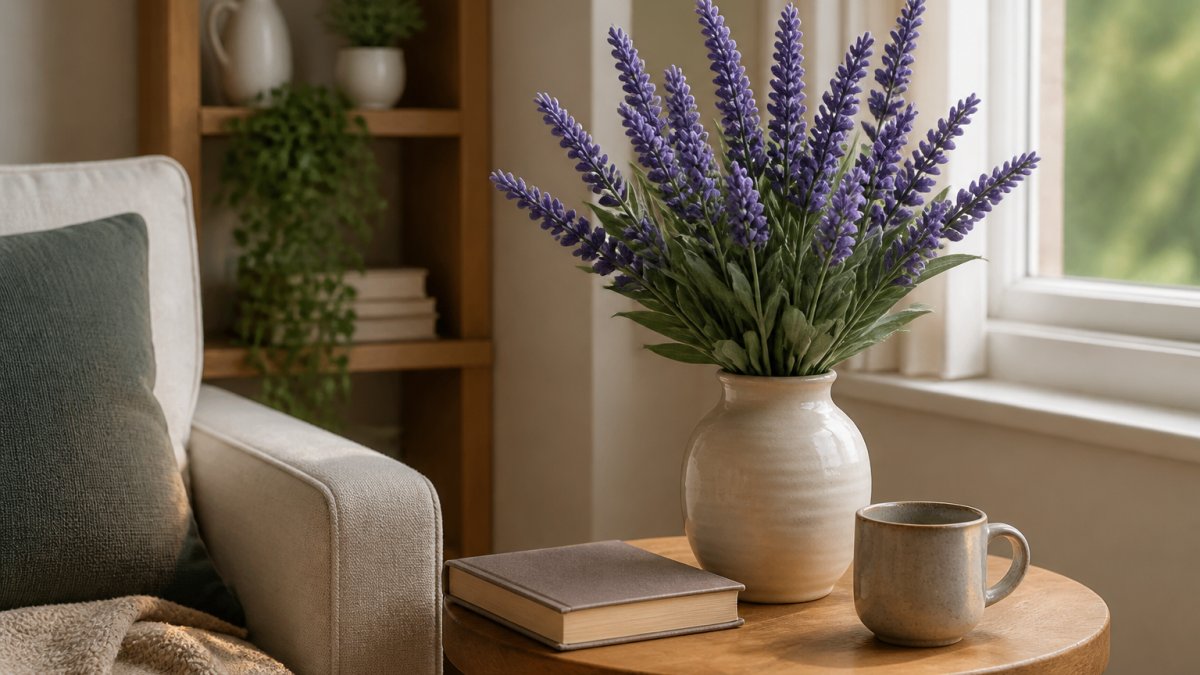
For a bedside table or reading nook, our Lavender flower bouquet in vase at $59.00 brings cottage-garden calm with zero scent, ideal if fragrance sensitivity rules out real lavender.

Small spaces benefit from a mini arrangement. The Bathroom or Side Table Mini Vase with Butterfly Ranunculus at $28.00 fits a shelf or vanity without crowding it.
Lavender flower bouquet in vase →
For a statement piece, the Bouquet of Magnolias in a White Vase at $99.00 stands 15 inches high and anchors a dining table or entryway console.

Room-by-Room Placement Guide
Where you place an arrangement changes how much you enjoy it. Here's how we'd approach a typical home:
- Living room: One medium bouquet on the coffee table or console. The Bouquet of Whimsey Daisies in a White Vase at $59.00 adds cheer without competing with artwork.
- Bedroom: Keep it small and low-scent. A bedside lavender arrangement works because felt carries no aroma to disturb sleep.
- Bathroom: Humidity is the enemy of fresh flowers and the friend of felt. A mini vase on the vanity stays pristine for years.
How to Clean Felt Flowers and Keep Them Looking New
Cleaning felt flowers takes about two minutes and no special products. A soft brush or a vacuum on its lowest setting with a brush attachment lifts dust from the petals; a slightly damp cloth handles most marks.
Three habits keep felt arrangements looking new:
- Dust monthly. A quick pass with a soft brush prevents buildup in the fibers.
- Keep them out of direct sun. Prolonged UV exposure fades any textile over time.
- Rotate placements seasonally. Moving an arrangement to a new room gives it a fresh look and evens out wear.
Felt flowers also hold up better around pets than most people expect. The densely matted fibers resist shedding, and while a cat that chews will eventually work a petal loose, the arrangement won't unravel the way a knitted item would.
Non-Floral and Faux Alternatives for Allergy-Friendly Floral Decor
Most guides stop at live flowers, but the keyword here is decor, and the strongest allergy-proof decor often contains no fresh blooms at all. Faux botanicals and non-floral accents deliver the same visual payoff with none of the pollen, scent, or daily upkeep. The trade-off is realism, which varies widely by material.
How the Main Materials Compare
- Silk flowers look convincing from across a room but read as artificial up close, especially in bright daylight. Petals hold dust and are usually spot-clean only.
- Paper flowers photograph beautifully and suit a styled shelf or backdrop, but they crush easily and are not ideal in humid rooms like bathrooms.
- Dried arrangements offer genuine texture and a warm, natural look. They are low-pollen, but many dried stems shed over time and fade within about a year.
A useful rule of thumb: the more a material looks like a real bloom up close, the more care it needs. Felt trades a little hyper-realism for years of dust-and-go performance, which is why we build every piece from dense, matted fibers rather than loose weave.
Non-Floral Accents That Add Greenery Without Pollen
If you want the feel of a garden without any flowering plant, these accents carry the look with minimal allergy risk:
- Potted succulents and cacti, minimal airborne pollen and forgiving care, though some varieties have spines or irritating sap, so keep them out of reach of children and pets.
- Faux greenery garlands, excellent for mantels, shelving, and stair rails, where a real trailing plant would be impractical to water.
- Wood, ceramic, or metal botanical sculptures, sculptural interest with zero upkeep and nothing to shed.
A Note on Pet and Child Safety
Allergy-friendly does not automatically mean pet-safe or child-safe. Several plants marketed as low-pollen, including some succulents, lilies, and certain dried grasses, can still be toxic if chewed or swallowed by cats, dogs, or small children. Faux and felt options avoid the toxicity question entirely, though you should still secure any arrangement on a high shelf if a pet is a determined chewer.
Where to Start
If you want to test a felt arrangement before committing to a larger piece, start with a Single Baby's Breath at $18.00 or a Lavender small bunch of 3 at $29.00. Both work as standalone accents or as additions to an arrangement you build yourself, and neither will drop a single pollen grain or shed a fiber the way dried stems can.
Cost, Longevity, and Care: Fresh vs. Felt Floral Decor
Fresh flowers cost less upfront and more over time. A $40 bouquet replaced every two weeks runs about $1,040 a year.
That math is the strongest argument for felt decor, and it's the question we hear most: how much am I actually saving?
Longevity favors felt by a wide margin.
Care effort runs in the opposite direction. Fresh flowers demand water changes, stem trimming, and daily attention.
Conclusion: Choosing the Right Hypoallergenic Floral Decor
The hardest part of choosing hypoallergenic floral decor is figuring out what actually bothers you.
For most people, handcrafted felt flowers solve all three problems at once. They carry no pollen, no scent, and no sap, and they last for years instead of days.
Browse our Shop Gallery Art to find a piece that fits your space, or reach out to discuss a custom arrangement built for your home.
Frequently Asked Questions
What are the best flowers for people with allergies?
Flowers with heavy, sticky pollen that insects carry, rather than wind-borne pollen, tend to cause fewer reactions. Roses, tulips, orchids, hydrangeas, carnations, and camellias are common choices. For a completely pollen-free option, handcrafted felt flowers made from Merino wool and recycled polyester felt blends offer the look of real blooms without any airborne particles. Always test a small arrangement first, since individual sensitivities vary.
Are felt flowers a good alternative for people with pollen allergies?
Yes. Felt flowers contain no pollen, no fragrance, and no sap, so they avoid the three most common triggers in traditional bouquets. A handcrafted felt bouquet such as the Lavender flower bouquet in vase ($59.00) delivers the same visual warmth as fresh stems without any airborne allergens. They also never shed pollen onto tables or shelves, which keeps allergy-friendly floral decor low-maintenance year-round.
How do you decorate with flowers without triggering allergies?
Choose low-pollen or pollen-free varieties, keep arrangements out of bedrooms where you spend the most time, and avoid strong-scented blooms like lilies or hyacinths. Wash your hands after handling fresh stems, and wipe surfaces weekly to remove settled pollen. For a zero-risk option, display felt or fabric flowers. A mini vase like the Bathroom or Side Table Mini Vase with Butterfly Ranunculus ($28.00) works well in small spaces without any allergy concern.
How do you clean and care for felt flower arrangements?
Dust felt flowers gently with a soft brush or a vacuum on the lowest setting with a brush attachment. For deeper cleaning, wipe with a barely damp cloth and let them air dry completely before returning them to their vase. Avoid soaking or machine washing, which can distort the hand-cut shapes. Stored and cleaned this way, a Merino wool felt bouquet keeps its color and structure for years, unlike fresh flowers that last a week or two.
What is a good gift for someone who is allergic to everything?
A handcrafted felt bouquet avoids pollen, fragrance, and contact irritants all at once, making it a safe choice for someone with multiple sensitivities. Options range from a Single Baby's Breath stem ($18.00) for a small token to the Bouquet of Magnolias in a White Vase ($99.00) for a statement gift. Because felt flowers never wilt, the recipient keeps the arrangement far longer than a fresh delivery.
Leave a comment